Polyaspartic vs Epoxy Garage Floors: Complete Comparison Guide

Jimmy Miller • May 6, 2026

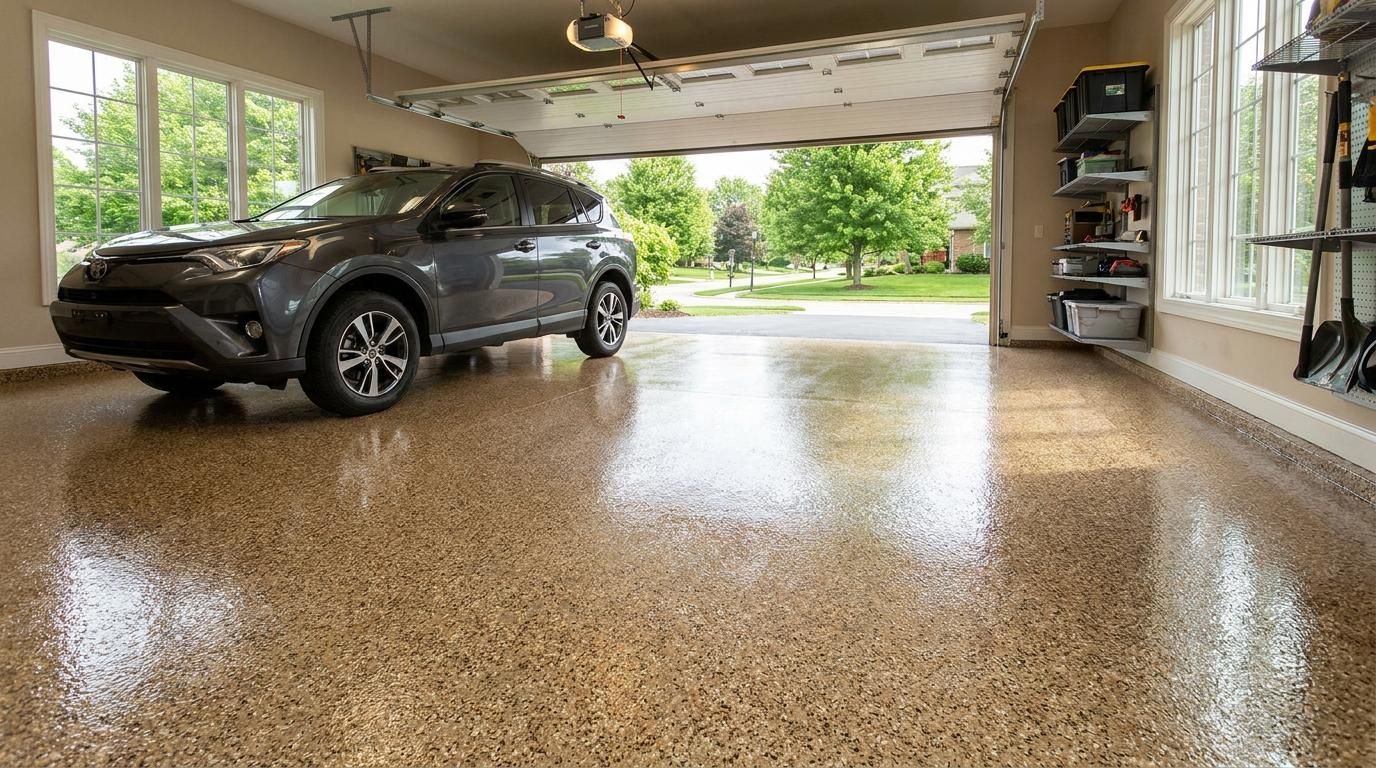
Polyaspartic garage floor coatings cure in hours, resist UV yellowing, and cost $4 to $10 per square foot installed. Standard epoxy costs $3 to $7 per square foot but requires 24 to 48 hours before foot traffic. KY Epoxy Flooring installs both systems across Central Kentucky garage floors and breaks down how they compare in real-world performance below.

After installing both systems side by side in hundreds of Bluegrass Region garages over the past decade, we've watched how each responds to Kentucky's specific combination of road salt exposure, humidity, and seasonal temperature swings. The differences show up after the first winter, not on the spec sheet.

How Polyaspartic and Epoxy Coatings Differ

These two systems use different chemistry, and those differences affect your garage floor for years.

Cure Time and Return to Use

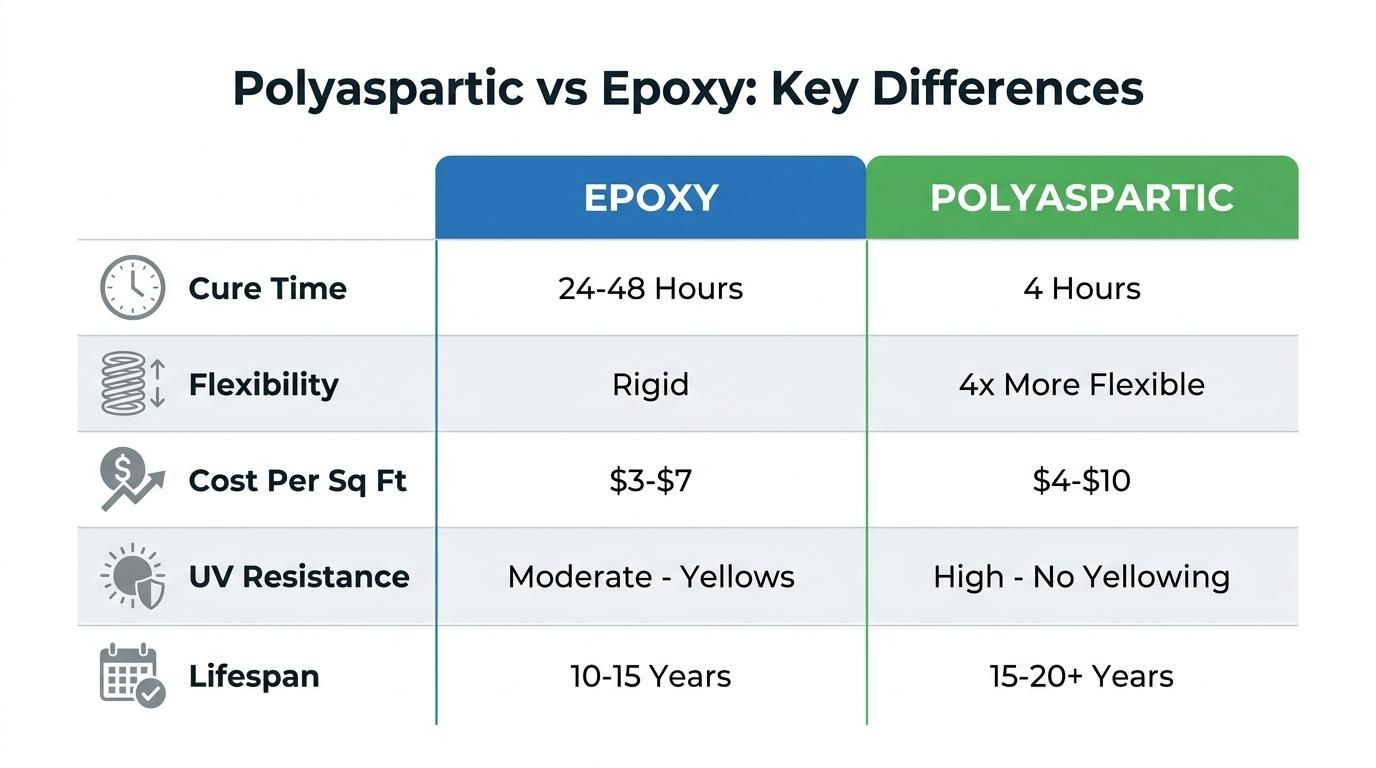
Epoxy needs 24 to 48 hours before foot traffic and up to 72 hours before parking. Polyaspartic cures in as little as four hours, so you can park on it the next morning. For homeowners who can't give up garage access for multiple days, that timeline matters.

Flexibility and Crack Resistance

Polyaspartic is roughly four times more flexible than standard epoxy after curing. Kentucky's 30 to 40 annual freeze-thaw cycles cause concrete slabs to expand and contract. Rigid epoxy develops micro-cracks under repeated thermal movement, while polyaspartic absorbs it without breaking the bond.

UV Stability

Standard epoxy yellows within two to three years in garages with south- or west-facing windows or open doors. Polyaspartic resists UV degradation and holds its original color for a decade or longer under the same exposure.

Total Lifespan

Standard epoxy lasts 10 to 15 years in a typical residential garage before recoating is needed. Polyaspartic systems last 15 to 20 years or longer under the same conditions, which is why KY Epoxy Flooring's residential installations carry a 20-year warranty.

Which Coating Handles Kentucky Conditions Better?

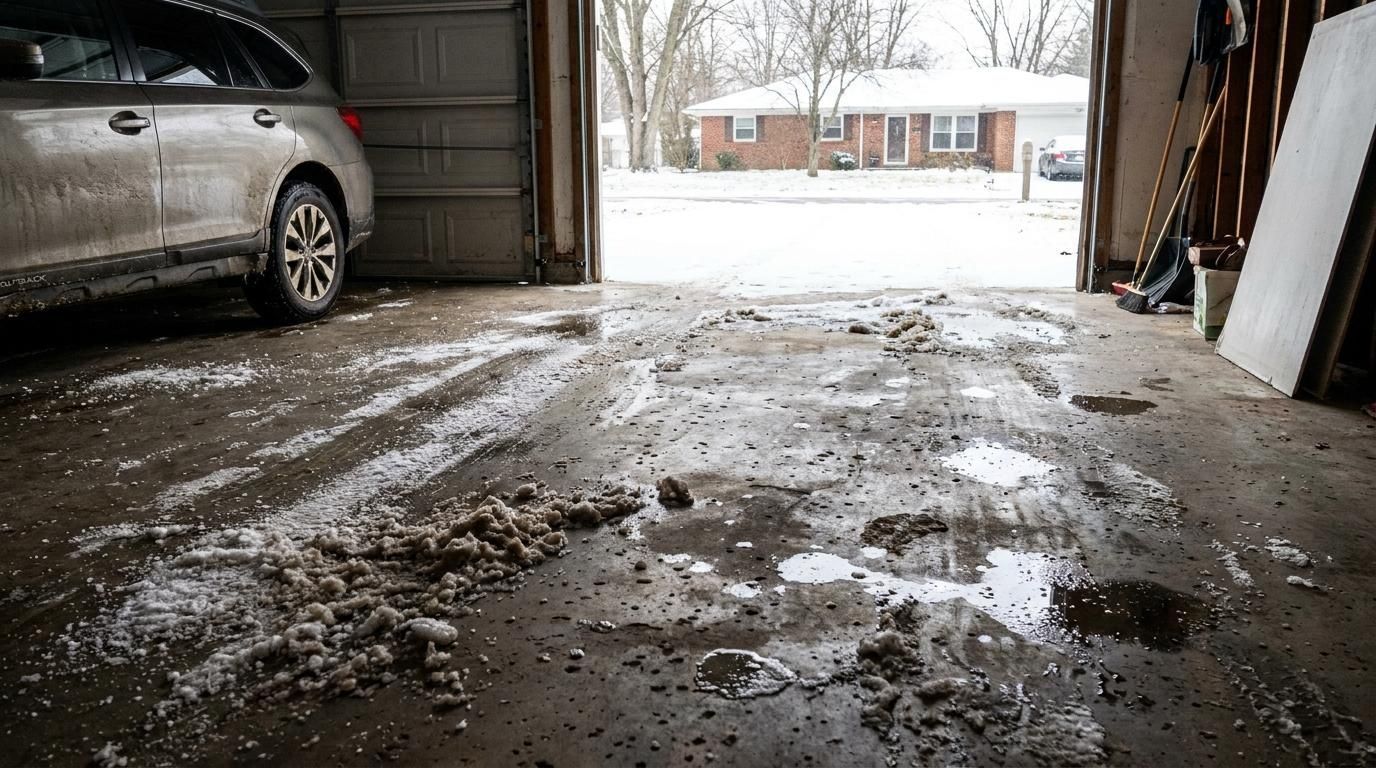
Central Kentucky puts both systems through a stress test most regions don't produce. Road salt tracked in from November through March attacks the bond between coating and concrete. Summer humidity above 70% drives moisture vapor through slabs. Seasonal UV then compounds wear on coatings already stressed by winter movement.

Standard epoxy resists salt and automotive chemicals well, but its rigidity becomes a liability during freeze-thaw. Polyaspartic matches that chemical resistance while adding the flexibility to handle thermal movement. KY Epoxy Flooring typically recommends a hybrid for Nicholasville and Lexington-area garages—an epoxy base coat for adhesion paired with a polyaspartic topcoat for weather resilience and UV stability.

What Each System Costs Over Five Years

The upfront price gap narrows when you factor in longevity. Solid-color epoxy runs $3 to $5 per square foot, while polyaspartic starts around $4 and reaches $10 for premium finishes. On a 500-square-foot two-car garage, that's $1,500 to $2,500 for epoxy versus $2,000 to $5,000 for polyaspartic.

Polyaspartic's resistance to yellowing, peeling, and thermal cracking means fewer repairs over time. A system backed by a 20-year residential warranty often costs less per year than an epoxy-only floor that needs touch-ups by year five. Spreading the investment across the warranty period, polyaspartic typically runs $100 to $250 per year—competitive with epoxy's total cost once recoating is factored in.

Frequently Asked Questions

Can polyaspartic be applied over an existing epoxy floor?

Polyaspartic bonds well to properly prepared epoxy surfaces. The existing coating needs diamond grinding to create a mechanical bond before the new topcoat goes on. This works when the original epoxy still adheres tightly to the concrete without widespread peeling or moisture damage underneath.

Does polyaspartic garage floor coating cost more than epoxy?

Polyaspartic runs 20 to 40% more per square foot than standard epoxy. The higher price reflects faster cure chemistry, UV-stable resins, and greater flexibility. Over a 10-year span, the total cost of ownership often favors polyaspartic because it typically avoids the recoating that epoxy-only floors need by year five to seven.

Which coating is better for a heated garage in Kentucky?

Both perform well in climate-controlled garages with less thermal stress. If your garage is heated and rarely exposed to road salt or UV, standard epoxy delivers strong value at lower upfront cost. Polyaspartic becomes the better choice when the garage door opens frequently or vehicles track in salt and moisture regularly.

Make the Right Coating Choice for Your Garage

Deciding between polyaspartic vs. epoxy comes down to how your garage is used and what your budget allows over time. Epoxy delivers solid protection at a lower upfront cost. It's ideal for climate-controlled garages with light traffic. Polyaspartic handles freeze-thaw, UV, and road salt with fewer compromises. Its same-day cure time means you lose one day of garage access instead of three.

Contact KY Epoxy Flooring at (859) 749-3449 for a free garage floor estimate.

By Jimmy Miller May 29, 2026
Compare DIY epoxy garage floor kits to professional installation in Kentucky. Learn about costs, preparation methods, cure times, and long-term durability.
By Jimmy Miller May 25, 2026
Choose the best concrete sealer for your Kentucky driveway. Compare penetrating vs. topical sealers, costs, & reapplication schedules for freeze-thaw climates.
By Jimmy Miller May 21, 2026
Learn how epoxy flooring helps restaurants meet Kentucky health codes. Read about food safety, durability, after-hours installation, and commercial warranties.
By Jimmy Miller May 18, 2026
Compare epoxy coatings, concrete paint, & sealers for Lexington basement floors. Learn their costs, lifespans, & which system handles Kentucky moisture best.
By Jimmy Miller May 15, 2026
Compare pool deck resurfacing options: coatings, overlays, acrylic, and rubber. KY Epoxy Flooring breaks down their costs and durability for Kentucky pools.
By Jimmy Miller May 10, 2026
Know when to seal concrete in Kentucky, including the best seasons for sealing, temperature requirements, & warning signs. Get tips from KY Epoxy Flooring.
By Jimmy Miller May 2, 2026
Driveway sealing costs $1 to $3 per square foot in Kentucky. KY Epoxy Flooring breaks down its pricing by sealer type, driveway size, and prep work for 2026.
Wet driveway with a dry strip down the center, reflecting sunlight near a suburban home
By Jimmy Miller April 22, 2026
Concrete sealer lasts 1 to 10 years, depending on the sealer type and exposure. KY Epoxy Flooring explains lifespans, warning signs, and resealing schedules.
Spacious modern living room with beige sofas, recessed lighting, and large sliding doors to a green patio
By Jimmy Miller April 15, 2026
Basement epoxy flooring pros and cons explained. KY Epoxy Flooring covers waterproofing, durability, cost, and what Kentucky homeowners need to know.
Open garage overlooking a snowy driveway, with a truck parked outside.
By Jimmy Miller April 10, 2026
Epoxy vs polyurea garage floor—KY Epoxy Flooring compares their durability, cure time, cost, and Lexington weather performance to help you choose.
Show More