Epoxy Flooring for Restaurants: Food Safety, Durability, and Compliance Guide for Commercial Kitchens
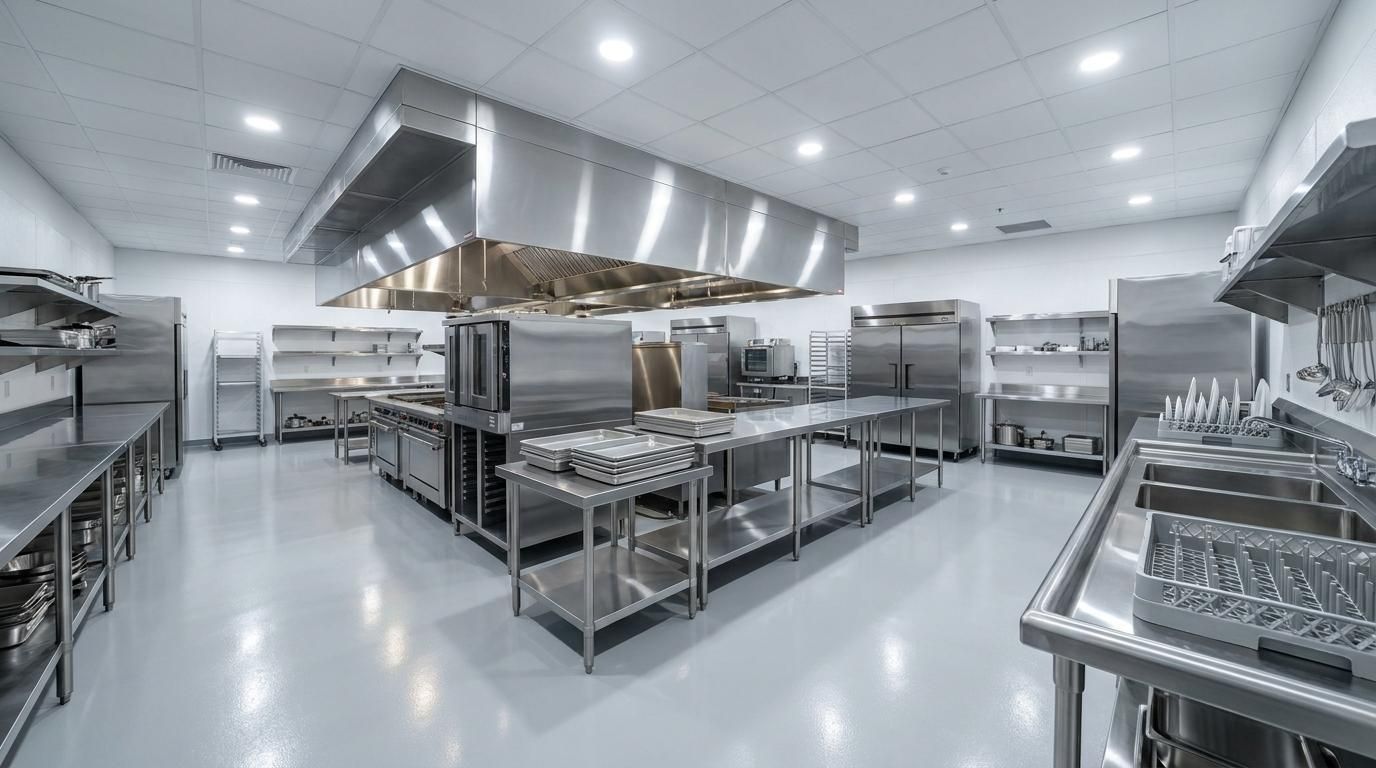
Restaurant kitchen floors must be smooth, nonabsorbent, and seamless to pass Kentucky health inspections under regulation 902 KAR 45:140, which requires a sealed cove base at every wall-floor junction and no open seams in food prep areas. Tile and vinyl composite tile create grout lines and seams that cause repeat citations during inspections. A single-pour epoxy system eliminates those failure points entirely. Installed commercial coatings typically cost $7 to $12 per square foot, an expense the restaurant recovers the first time it avoids a citation that tile would have caused.
KY Epoxy Flooring installs commercial concrete coatings across Central Kentucky, backed by a 10-year warranty. The sections below cover what health inspectors actually look for, how professional coatings handle the thermal and chemical stress of a working kitchen, and how to schedule installation without closing your kitchen.
What Health Inspectors Look for in Restaurant Flooring
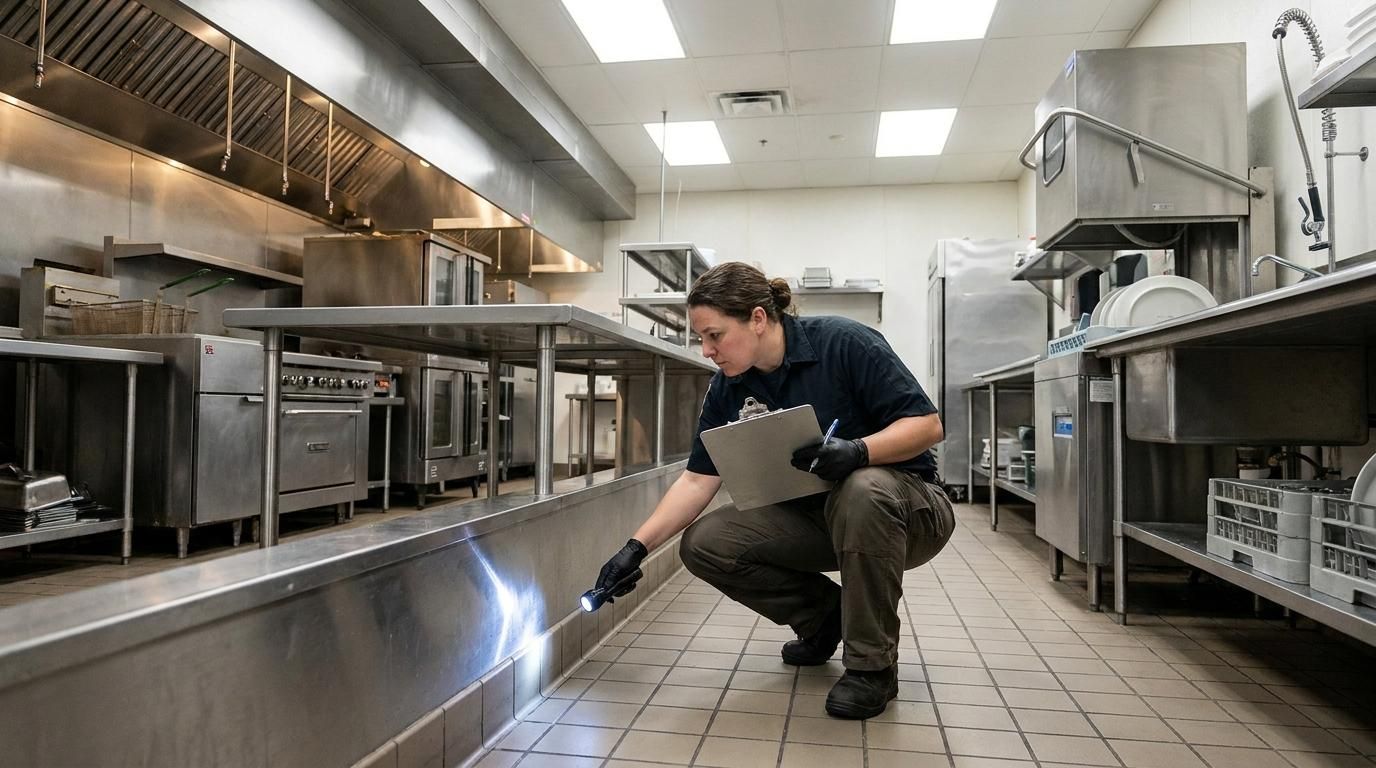
Health inspectors evaluate kitchen floors based on surface integrity, drainage, and cleanability—the same criteria used in third-party food safety audits for chain restaurants and franchise operations. Cracked tiles, peeling coatings, and unsealed seams are among the most common causes of citations because they trap food particles and harbor bacteria.
Kentucky health inspections specifically check for:
- Smooth, intact surfaces with no chips, cracks, or holes
- Nonabsorbent material in all food prep and warewashing areas
- Sealed cove base where walls meet the floor
- Functional floor drains with no standing water
- No grease buildup in seams or around equipment bases
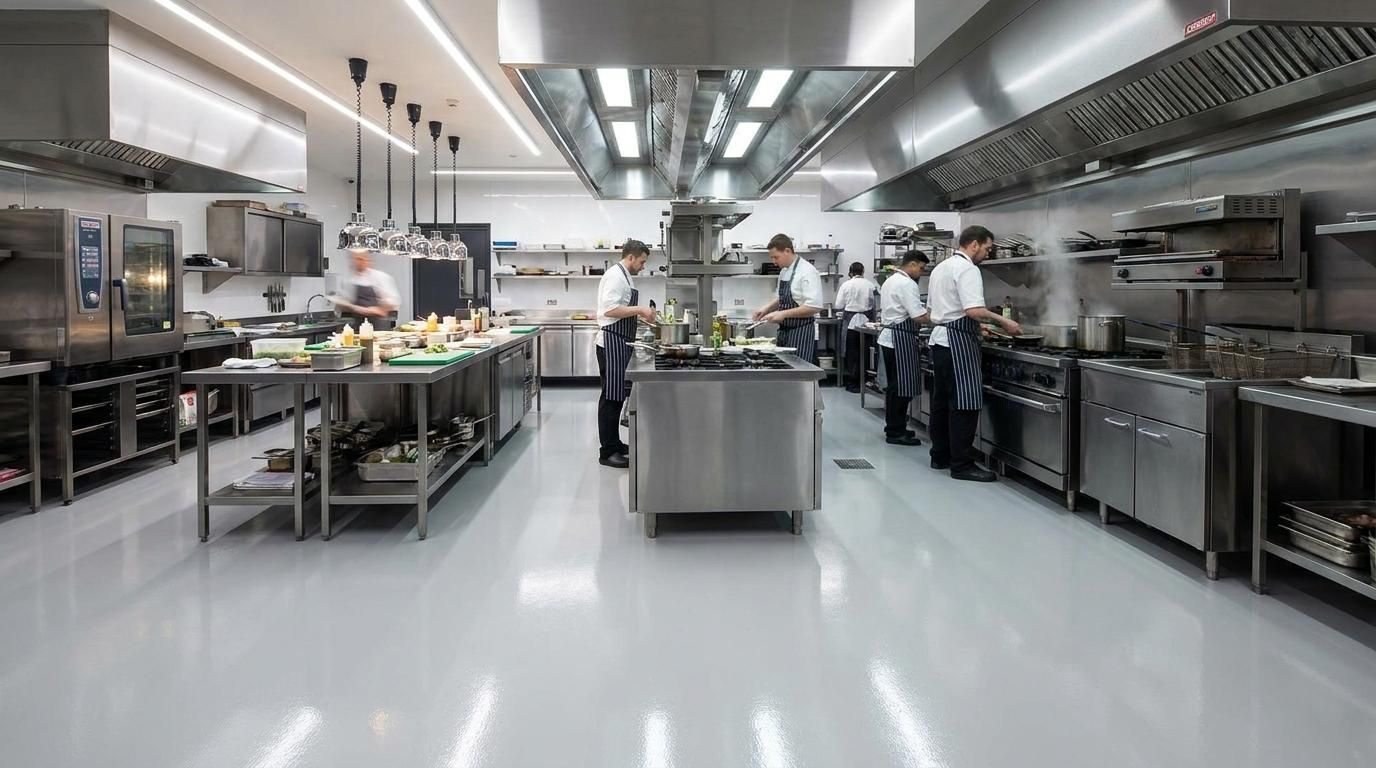
Seamless epoxy eliminates the grout lines and seams that make tile and vinyl composite tile floors a recurring compliance risk. A single-pour coating has no joints for bacteria to colonize, which is why kitchens with professional coating systems tend to see fewer repeat violations during inspections.
How Epoxy Performs in Commercial Kitchens
Restaurant kitchens punish floors harder than most residential spaces. Thermal shock from boiling water hitting cold concrete, daily chemical exposure from degreasers and sanitizers, and rolling loads from heavy equipment attack the surface every shift.
Professional 100%-solids epoxy systems handle these conditions through thickness and chemistry. Applied at 15 to 20 mils, commercial kitchen coatings resist:
- Thermal cycling from freezer-to-fryer temperature swings
- Chemical attack from industrial degreasers, bleach, and sanitizing agents
- Impact damage from dropped pans, kegs, and heavy equipment
- Slip hazards through textured anti-slip additives rated for wet environments
KY Epoxy Flooring's commercial systems include antimicrobial additives that inhibit bacterial growth between cleanings, and our 10-year commercial warranty covers both materials and workmanship under normal kitchen operating conditions. Most of the reasons commercial epoxy floors fail trace back to installation shortcuts and substrate prep gaps that proper application would have caught, exactly the kind of issues a warranty-backed system is built to prevent.
Schedule Installation Without Closing the Kitchen
The biggest concern for restaurant owners isn't the coating. It's the downtime. Closing a kitchen for even three days means lost revenue, cancelled reservations, and disrupted staff schedules. That's why timing and phasing matter as much as the product itself.
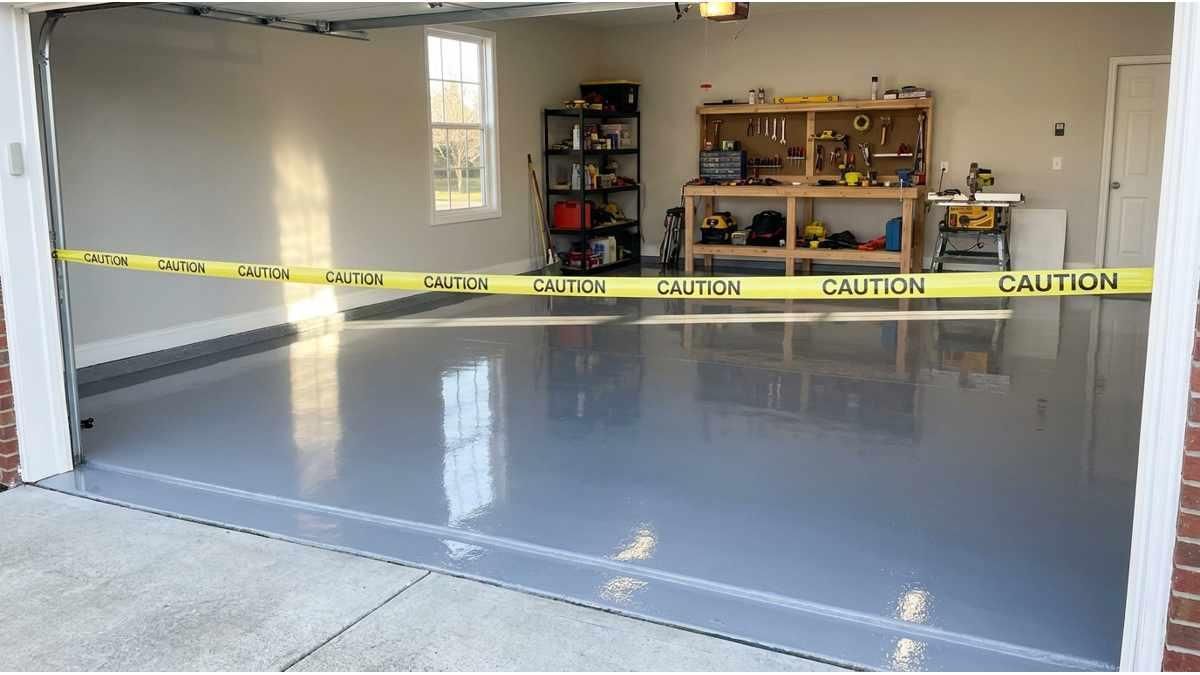
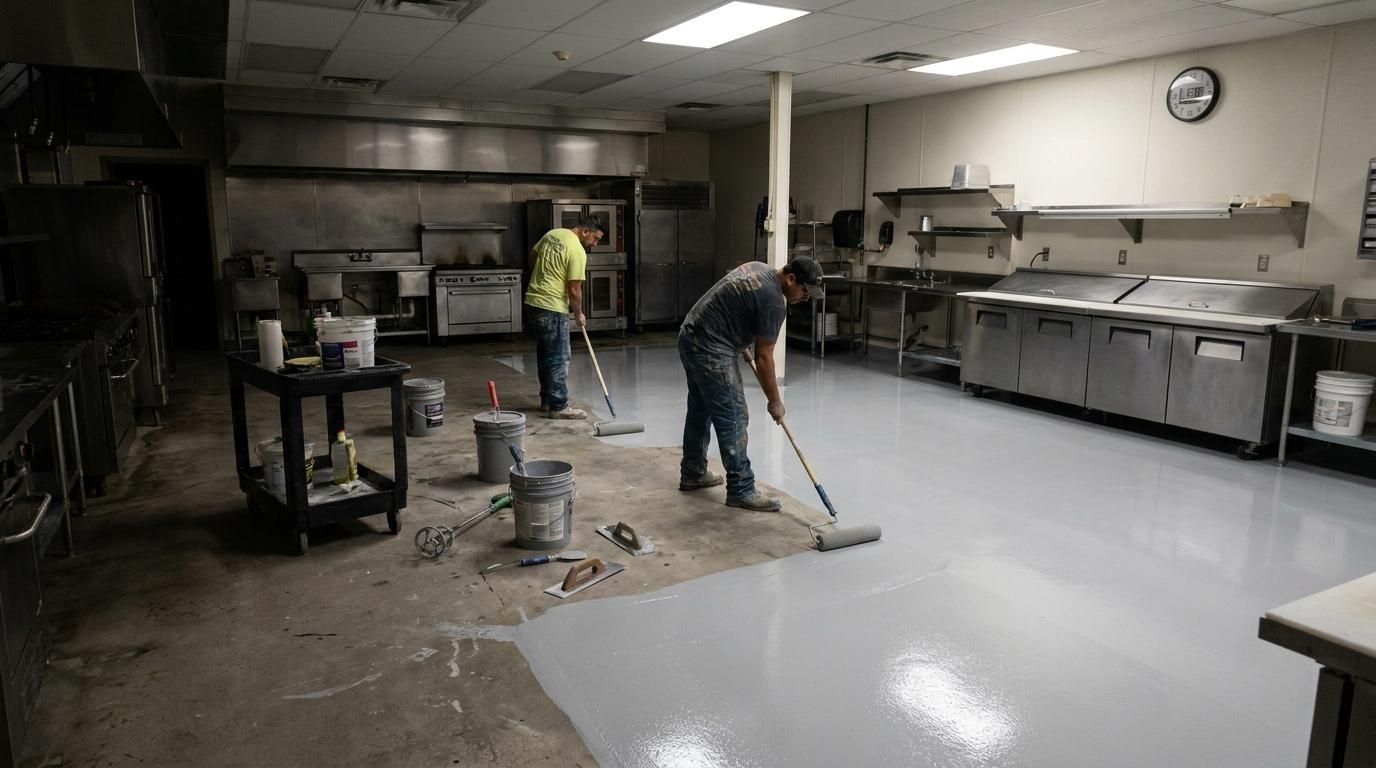
KY Epoxy Flooring offers after-hours installation for commercial clients, so the work happens while the restaurant is closed. Fast-cure polyaspartic topcoats are walkable in two to four hours and ready for full kitchen use within 24 hours. For restaurants in Nicholasville and Richmond that can't afford a single lost service, the crew works in sections overnight, coating half the kitchen one night and the other half the next.
Planning installation during a slower business period, typically January through March in Kentucky, reduces the operational impact further.
Frequently Asked Questions
How much does commercial epoxy flooring cost for a restaurant kitchen?
Most restaurant kitchen floors cost $7 to $12 per square foot installed for a food-safe, slip-resistant commercial system. The final price depends on kitchen size, existing floor condition, and whether the spec calls for antimicrobial additives or enhanced chemical resistance. A 1,000-square-foot kitchen typically runs $7,000 to $12,000.
Can epoxy be installed over existing tile in a commercial kitchen?
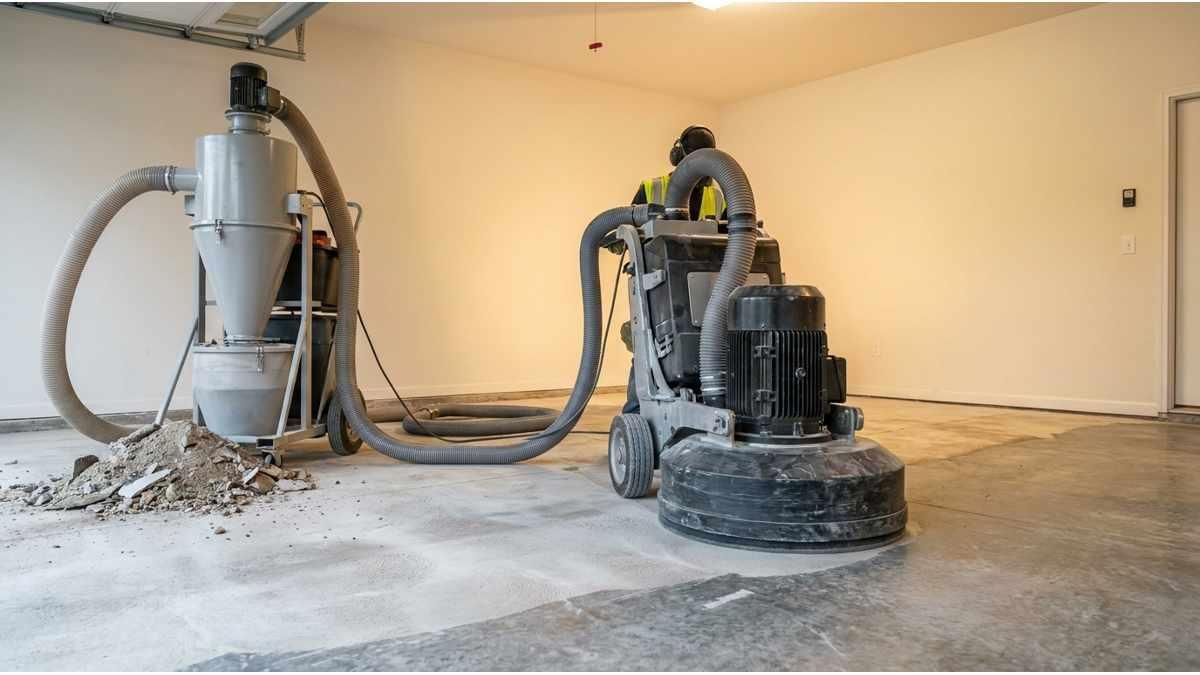
Existing tile should be removed before coating a commercial kitchen floor. Tile seams and grout lines create weak points that compromise the seamless surface health codes require. KY Epoxy Flooring diamond-grinds the concrete substrate after tile removal to ensure proper adhesion for the new coating system.
How do you maintain an epoxy restaurant floor?
Daily maintenance requires sweeping and mopping with a neutral pH cleaner. The seamless surface has no grout lines to trap food particles, which cuts cleaning time compared to tile. Periodic professional recoating every five to seven years maintains the protective barrier and slip-resistant texture.
Get a Kitchen Floor That Passes Every Inspection
Tile cracks. Grout fails. Vinyl composite tile lifts at the seams. Each of those drawbacks can trigger a citation during inspection, and each citation means another closure for repairs that eats into revenue every time. Seamless commercial epoxy installed at 15 to 20 mils eliminates the surface defects that cause citations—no grout, no seams, no porous surfaces for contaminants to collect.
KY Epoxy Flooring installs these systems after-hours so Lexington-area restaurants stay open during the day. Call (859) 749-3449 for a free commercial kitchen floor assessment.