How Long Does Concrete Sealer Last in Kentucky? Lifespan and Resealing Guide

Jimmy Miller • April 22, 2026

How long does concrete sealer last? Typically one to ten years, depending on sealer type, surface traffic, and weather exposure. Penetrating sealers protect for five to ten years, while acrylic topical sealers wear down in one to three years. KY Epoxy Flooring applies professional-grade sealers across Central Kentucky and explains what determines your sealer’s lifespan below.


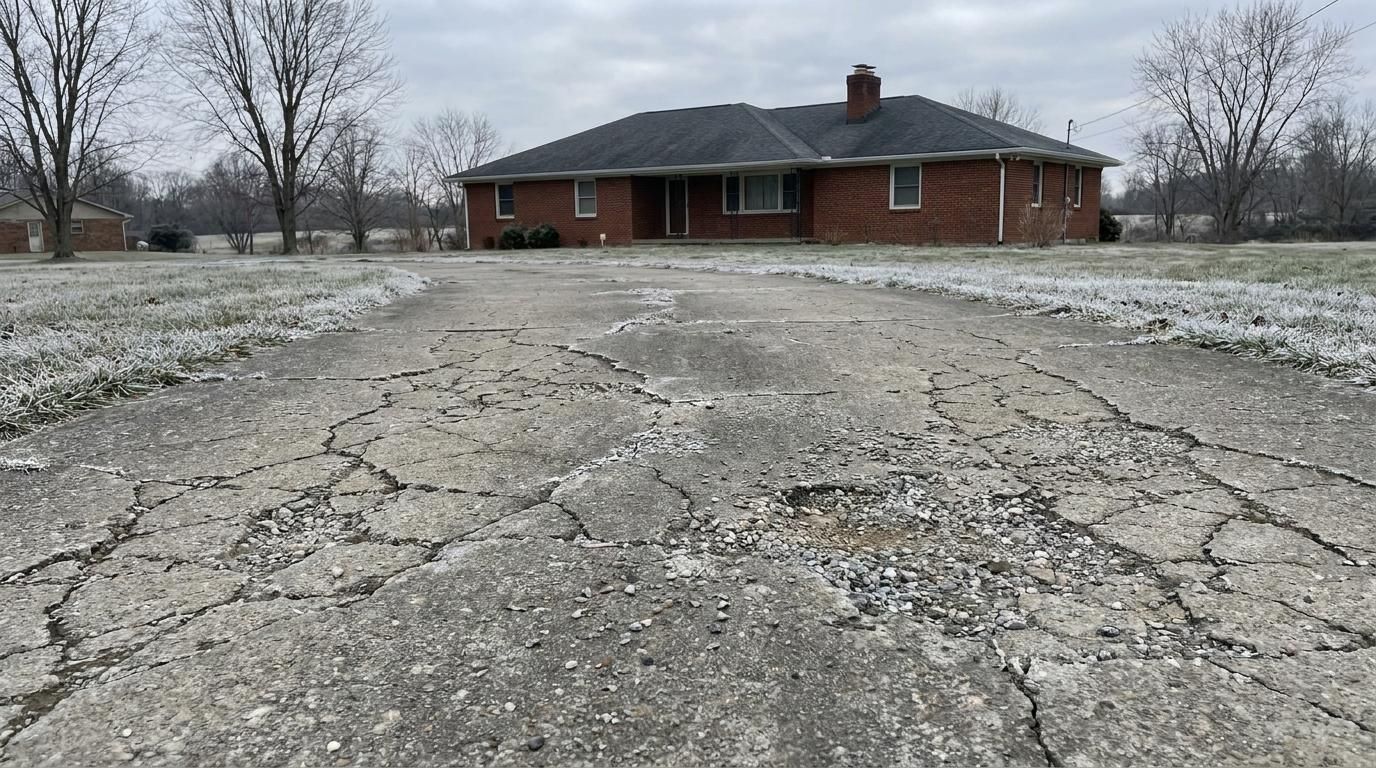
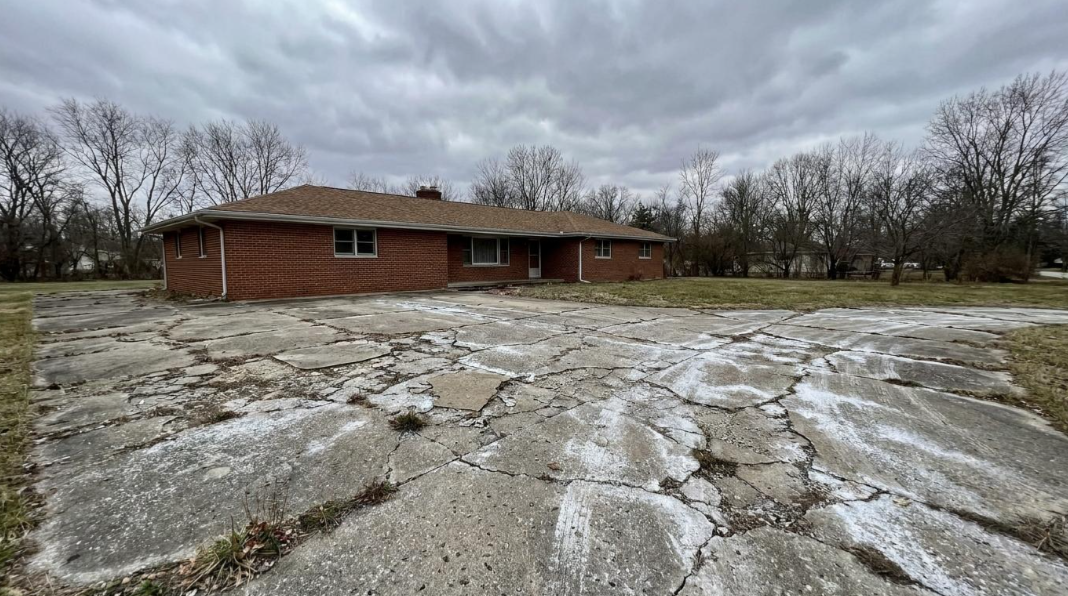
Is the sealer on your driveway or patio still doing its job? If it was applied more than three years ago, there’s a good chance Kentucky’s freeze-thaw cycles have already worn through it. A thirty-second water test tells you where your concrete stands before summer’s UV rays and rain accelerate the damage.

Sealer Types and Their Expected Lifespans

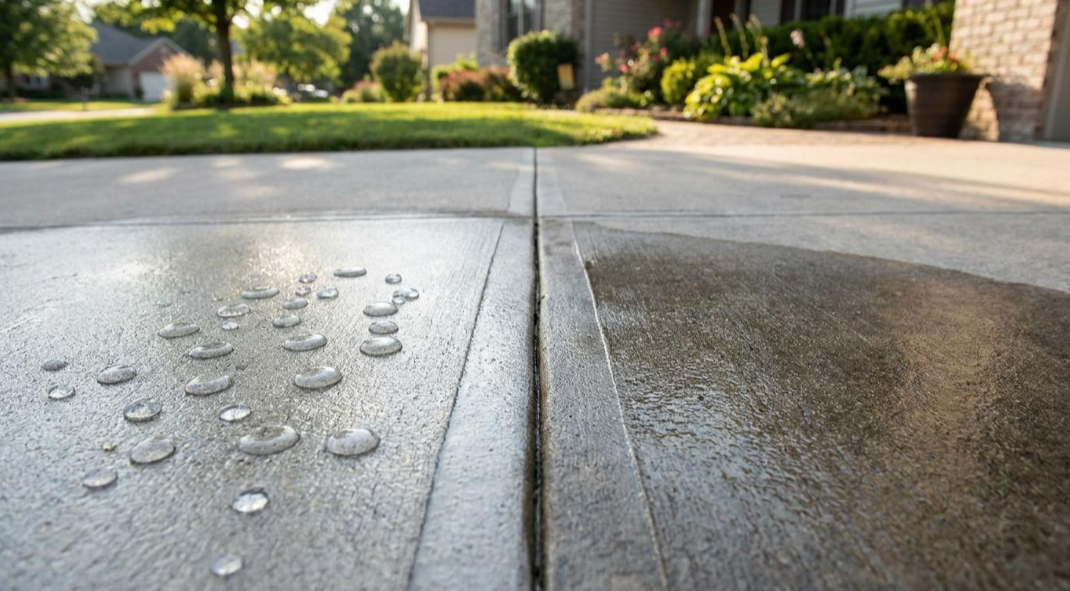
Wet concrete sidewalk with water droplets, split by a seam, in a residential driveway.

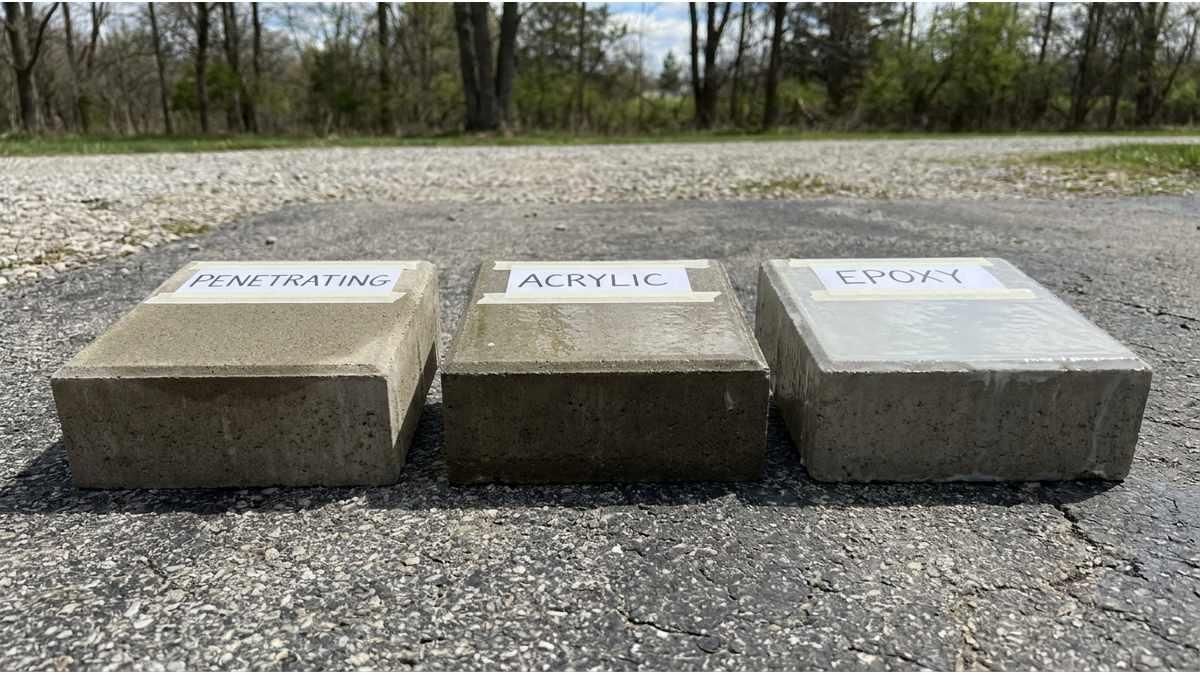
Each sealer category protects concrete differently and wears at different rates.

Penetrating Sealers (5 to 10 Years)

Penetrating sealers, including silane, siloxane, and siliconate formulations, penetrate concrete pores and form a barrier beneath the surface. They don’t form a film that traffic or UV can wear away. KY Epoxy Flooring uses industrial-grade silane and siloxane products for driveways, patios, and exterior surfaces where freeze-thaw protection matters most.

Acrylic Sealers (1 to 3 Years)

Acrylic sealers sit on top of concrete and create a visible sheen. They’re affordable and easy to apply, which makes them popular for DIY projects. Foot traffic and UV exposure break down the surface film quickly. Kentucky driveways sealed with acrylic products typically need reapplication every one to two years.

Epoxy and Polyurethane Sealers (5 to 10 Years)

Thicker film-forming sealers like epoxy and polyurethane resist chemicals, stains, and abrasion better than acrylics. These systems work best on interior surfaces like garage floors and basements, where UV exposure is limited, and foot traffic is the primary wear factor.

What Shortens Sealer Life in Kentucky

Kentucky’s climate accelerates sealer wear faster than regions with milder weather patterns.


Freeze-thaw cycling is the primary factor. Water enters concrete pores, freezes, expands, and puts pressure on the sealer bond. Central Kentucky sees 30 to 40 of these cycles per winter, and each one weakens topical sealers slightly. Road salt attacks acrylic sealers aggressively. Homes in Stanford, Lexington, and along major highways see salt residue for five months each year. That exposure can cut an acrylic sealer’s effective life in half.


UV exposure during humid Kentucky summers breaks down surface-film sealers faster than penetrating products. South-facing driveways and patios take the hardest hit, often showing wear a full season earlier than shaded surfaces.

How To Tell When Resealing Is Needed

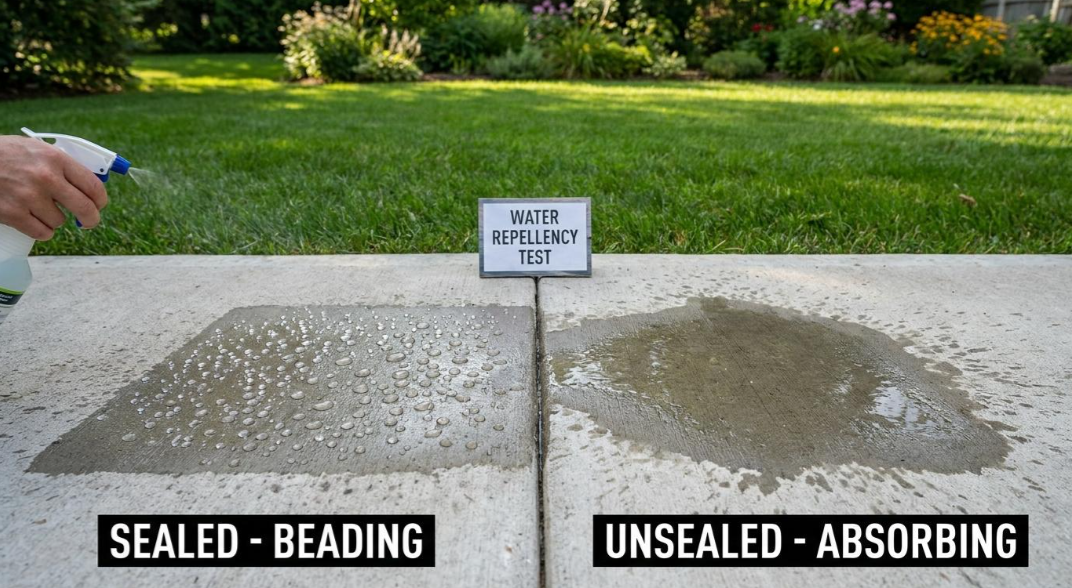
Concrete slab comparison labeled sealed-beading and unsealed-absorbing, with water on each side.

Pour a small amount of water on the surface. If water beads up, the sealer is still active. If water darkens the concrete and soaks in within seconds, protection has worn away.


Other warning signs include surface whitening or flaking on film-forming sealers, dark stains that didn’t penetrate before, and concrete dust on shoes after walking across a previously sealed surface. Catching these signs early lets you reseal before moisture causes spalling or crack expansion.

Resealing Timeline by Surface

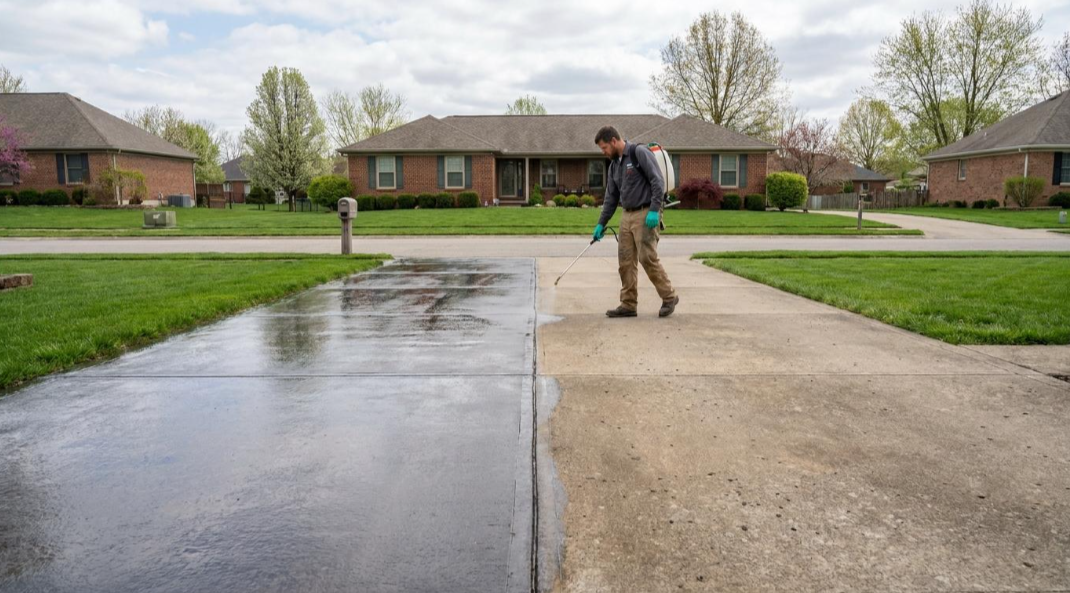
Worker spraying sealant on a driveway, with wet black pavement beside unfinished concrete in a suburban neighborhood

Different surfaces face different wear patterns. Your resealing schedule should match actual conditions rather than a fixed calendar. Follow the same maintenance approach you’d use for any coated surface.


  • Driveways: Every 2 to 3 years for acrylic, every 5 to 7 years for penetrating sealers
  • Patios: Every 2 to 4 years, depending on sun exposure and furniture traffic
  • Garage floors: Every 5 to 10 years with professional-grade systems
  • Pool decks: Every 2 to 3 years due to constant water and chemical exposure


Sidewalks and walkways: Every 3 to 5 years with moderate foot traffic

Frequently Asked Questions

Does concrete sealer wear off visibly, or does it gradually stop working?

Topical sealers like acrylics wear off visibly with dulling, whitening, or flaking as the film degrades. Penetrating sealers lose effectiveness gradually without visible signs, which is why the water bead test is the most reliable check, regardless of which product was applied.

Can I apply a new sealer over an old sealer without stripping?

Penetrating sealers can be reapplied directly over a previous penetrating application without stripping. Film-forming sealers like acrylics require the removal of the old layer first to ensure proper adhesion. KY Epoxy Flooring strips and reapplies when the existing product requires it.

Is it better to seal concrete in spring or fall in Kentucky?

Spring and early fall both work well. Concrete needs temperatures above 50°F and dry conditions for at least 24 hours after application. In Central Kentucky, April through May and September through October typically provide the most reliable sealing windows for consistent results.

Don’t Wait for the Water Test to Fail

A sunlit house with a curved driveway, surrounded by trees, shrubs, and a landscaped front yard.

The longevity of a sealer depends on choosing the right product and reapplying before its protection fully wears away. A penetrating sealer on a Kentucky driveway typically lasts 5 times longer than acrylic, but both need to be monitored. Spending $500 on timely resealing prevents thousands of dollars in concrete repair due to freeze-thaw damage.


Request a free concrete assessment from KY Epoxy Flooring. Call (859) 749-3449 for professional sealing across Central Kentucky.

Spacious modern living room with beige sofas, recessed lighting, and large sliding doors to a green patio
By Jimmy Miller April 15, 2026
Basement epoxy flooring pros and cons explained. KY Epoxy Flooring covers waterproofing, durability, cost, and what Kentucky homeowners need to know.
Open garage overlooking a snowy driveway, with a truck parked outside.
By Jimmy Miller April 10, 2026
Epoxy vs polyurea garage floor—KY Epoxy Flooring compares their durability, cure time, cost, and Lexington weather performance to help you choose.
By Jimmy Miller March 2, 2026
Garage epoxy flooring in Kentucky costs $3 to $12 per sq ft. Learn what actually drives the price, from system type to prep requirements, and garage size.
By Jimmy Miller February 2, 2026
Wondering how much is epoxy flooring in 2026? Discover the key factors influencing costs, from materials to labor, and see our updated price breakdown for Kentucky homes and businesses.
By Jimmy Miller January 5, 2026
Discover the top 7 benefits of epoxy floors for your Kentucky home or business. Learn about its durability, maintenance, safety & more with KY Epoxy Flooring.
By Jimmy Miller December 1, 2025
Learn how KY Epoxy Flooring helps food facilities stay audit-ready with seamless, chemical-resistant coatings formulated to meet FDA and USDA standards.
By Jimmy Miller November 3, 2025
Countless Kentucky auto shops rely on professional epoxy flooring services. Learn about the multiple benefits they offer from the experts at KY Epoxy Flooring.
By Jimmy Miller October 1, 2025
Epoxy flooring offers enhanced durability and aesthetics for Lexington, KY properties. Discover its benefits and more from the pros at KY Epoxy Flooring.
By Jimmy Miller September 1, 2025
Transform cracked, stained patios with professional epoxy coating in Kentucky. Get 15-20 year durability, stain resistance & stunning designs. Free consultation available.
By Jimmy Miller August 1, 2025
Picture this: You pull into your garage after a long day, and instead of being greeted by oil stains, cracks, and that perpetually dusty concrete floor, you're welcomed by a sleek, glossy surface that looks like it belongs in a luxury showroom. Or imagine walking into your basement and seeing a floor so beautiful and durable that you actually want to spend time down there. This isn't a fantasy—it's what residential epoxy flooring can do for your home. If you're tired of concrete floors that seem to attract every stain, crack at the slightest provocation, and make your spaces feel unfinished, you're not alone. Thousands of homeowners across Kentucky are discovering that epoxy floor coatings are no longer just for commercial warehouses. They're transforming garages, basements, patios, and even driveways into spaces that are both stunning and incredibly practical. What Makes Residential Epoxy Floors Special? Epoxy flooring is essentially a protective and decorative coating applied over existing concrete surfaces. Think of it as giving your concrete floors a complete makeover—one that can last 15-20 years with proper care. The process involves applying multiple layers of epoxy resin that cure to create a surface that's harder than the concrete underneath. But here's what makes epoxy truly remarkable for homeowners: it's not just about durability. Modern epoxy systems offer an incredible range of colors, patterns, and finishes. Want a subtle gray that complements your home's aesthetic? Done. Prefer a bold blue that makes a statement? Absolutely possible. Some homeowners even choose decorative flakes or metallic finishes that create depth and visual interest. Where Epoxy Shines in Your Home
Show More